
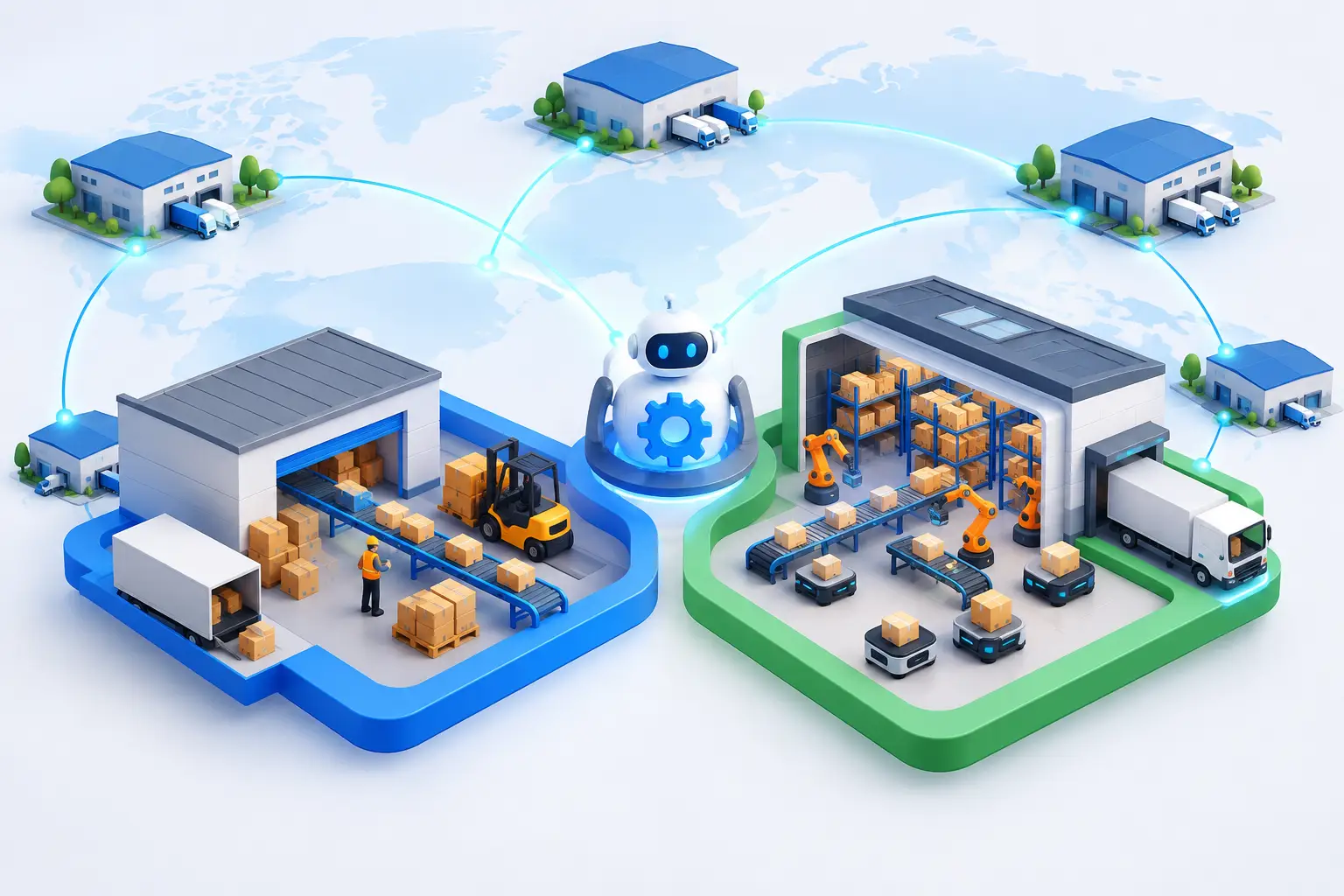
A warehouse can look perfect on a floor plan and still choke by ten in the morning. Cartons pile up at a merge, a sorter runs half empty while another jams, and the team starts moving product by hand. A good Conveyor company does not start by asking how many square feet you have. It asks how many units must move through the building in the busiest hour, and what has to happen to each one along the way.
Why Floor Space Is the Wrong Starting Point
Floor space is easy to measure, which is why it gets so much attention. A drawing shows aisles, bays and docks, and it is tempting to fill the room with as much conveyor as it will hold. But the length of a conveyor line says nothing about how many items per hour the system can handle.
Throughput is the real measure. It is the number of cartons, totes or parcels that leave the system each hour without backing up. A compact layout with smart merges can outperform one that sprawls across the whole building, and it usually costs less to run and maintain.
Cramming equipment into every corner also causes trouble later. Maintenance crews need access, operators need clear sight lines, and future growth needs somewhere to go. Space left empty on purpose is often the cheapest upgrade you will ever make.
Start With Peak Hour Numbers
Averages mislead in warehousing. A site that ships 20,000 cartons a day might push half of them through in the three hours before the afternoon carrier cutoff. Design for the daily average and the system fails exactly when it matters.
A designer needs a few real numbers before drawing anything. These include peak cartons per hour, the range of carton sizes and weights, how many destinations the product splits into, and how much volume swings across the year. Seasonal peaks expose weak designs, so ask for last November’s data and not only last month’s.
Take a simple example. If a site needs 6,000 cartons an hour at peak and one induction station can realistically feed 1,200, you need at least five stations, plus a margin for breaks and slowdowns. The math is basic, yet it gets skipped surprisingly often, and it tells you more than total conveyor length ever will.
Product mix matters as much as volume. Polybags, flimsy cartons and tall boxes behave differently on belts and sorters, and one awkward item type can force a design change. It is far better to find that out on paper than on the floor.
What a Conveyor Sorter Does to Your Numbers
A conveyor sorter takes items from a single stream and sends each one to the right destination, such as a shipping lane, a customer order or a dock door. That sounds simple until you count how many decisions it makes in a minute.
Several types exist. Sliding shoe sorters move cartons gently sideways and suit mixed or fragile loads. Cross-belt sorters carry items on small belts and handle small parcels at high speed. Tilt tray sorters are common for apparel and polybags, and pop-up wheel sorters work well for sturdy cartons at lower cost. None is best on its own, because the right choice depends on what you ship and how fast.
Induction is where most sorters win or lose. If items are fed in unevenly, with gaps, overlaps or poor spacing, the sorter runs below its rated speed. A sorter rated for 8,000 items an hour that gets fed well at 5,000 is a 5,000 item system, whatever the brochure says.
Recirculation deserves attention too. Items that miss their destination loop around for another try, which is fine in small numbers and harmful when a full chute keeps sending cartons back through the loop. Chute count and size deserve as much thought as the sorter itself.
Where Throughput Gets Lost
Most throughput problems are not dramatic. They are small losses that add up, usually at the same handful of places. The table below lists the usual suspects and what tends to fix each one.
| Problem area | What goes wrong | Typical fix |
| Merges | Two lines combine and cartons collide or queue | Timed merge controls and enough accumulation length |
| Induction | Uneven spacing starves the sorter | Dedicated induction stations with gapping |
| Chutes and lanes | Full lanes send items back around | Larger lanes, overflow paths and lane-full sensors |
| Controls | Slow decisions or poor scan reads | Better scanner placement and tuned software |
| Maintenance access | Stops take too long to fix | Walkways, clear access and standard spare parts |
Notice that almost none of these have to do with how much conveyor is installed. They are about how items move, wait and get routed.
Controls deserve a harder look than they usually get. The software that coordinates scanners, sorters and your warehouse system decides how smoothly everything flows. A mechanical design that looks perfect can still stall if scans fail or instructions arrive late. Warehouse automation works best when hardware and software are designed together, and not bought separately and joined at the end.
Layout Choices That Keep Cartons Moving
Straight runs with gentle curves move product more reliably than a maze of tight turns. Every transfer point, where a carton passes from one conveyor to another, is a chance for a jam. Fewer transfers usually means fewer stoppages.
Accumulation zones work as shock absorbers. When downstream lanes slow for a moment, accumulation lets cartons wait in line without crashing into each other. Too little and the line stops. Too much and you have paid for conveyor that does nothing most of the day.
Flows that behave differently should be kept apart. Fast small items and slow heavy cartons do not belong on the same path if you can avoid it, and returns or exceptions deserve their own lane so one odd item cannot block the main flow. Many sites also add a manual or semi-automated bypass so a single failure does not halt shipping completely.
People are part of the layout as well. Put induction stations where staff can reach cartons without twisting or walking far, and keep emergency stops and access points obvious. A system people dislike working beside tends to be run poorly, and that shows up in the numbers.
The Building Has a Say Too
A conveyor system lives inside a structure, and the structure sets limits. Floor flatness affects how equipment tracks. Roof height decides whether a mezzanine is possible. Column spacing can force a layout change nobody budgeted for. Sprinklers, lighting and electrical capacity tend to show up late and cost real money when they do.
That is why it helps to work with a team that covers both the equipment and the building work, ideally an industrial construction company that understands how automation gets installed in a working facility. Coordination between trades is where schedules slip. When one party designs the system and another pours the slab, small mismatches turn into change orders.
Installation in a live warehouse is its own challenge. Operations rarely stop for a project, so the work is phased around shifts, shipping deadlines and peak weeks. Ask how the installer plans to keep you shipping while the system goes in, and be skeptical of any plan that assumes a long shutdown.
Testing, Growth and What to Ask Before You Sign
Before go-live, the system should be tested with real product and not only empty boxes. Run your worst carton types, your peak rate and your ugliest mix of destinations. Simulation helps early on, but nothing replaces a live trial with the items you actually ship.
Growth is the other piece. A system built for exactly today’s volume is outdated on opening day. Ask where extra induction stations could go, whether the sorter can be lengthened and how many more chutes the layout could take. Leave that room in the drawings, even if you never use it.
Get throughput guarantees in writing, with the conditions attached. A figure quoted without the product mix, carton size range and induction method is just a brochure number. Good vendors are comfortable putting measurable targets in the contract, and they can explain how the figure was reached.
Support after startup counts as well. Spare parts, response times and training for your maintenance staff decide how quickly you recover from a stoppage. A sorter sitting idle for a day while a part ships can cost far more than the part ever did.
If you are planning a new system or trying to fix one that misses its numbers, start with your peak hour data and work backward. When you are ready to talk through your layout, contact us and bring your volumes, carton profiles and growth plans.
